

Want a Quick Summary?
Get ChatGPT to summarize this article for you in seconds.
This may be awkward, should you have ever taken hours to get your title tag just right.
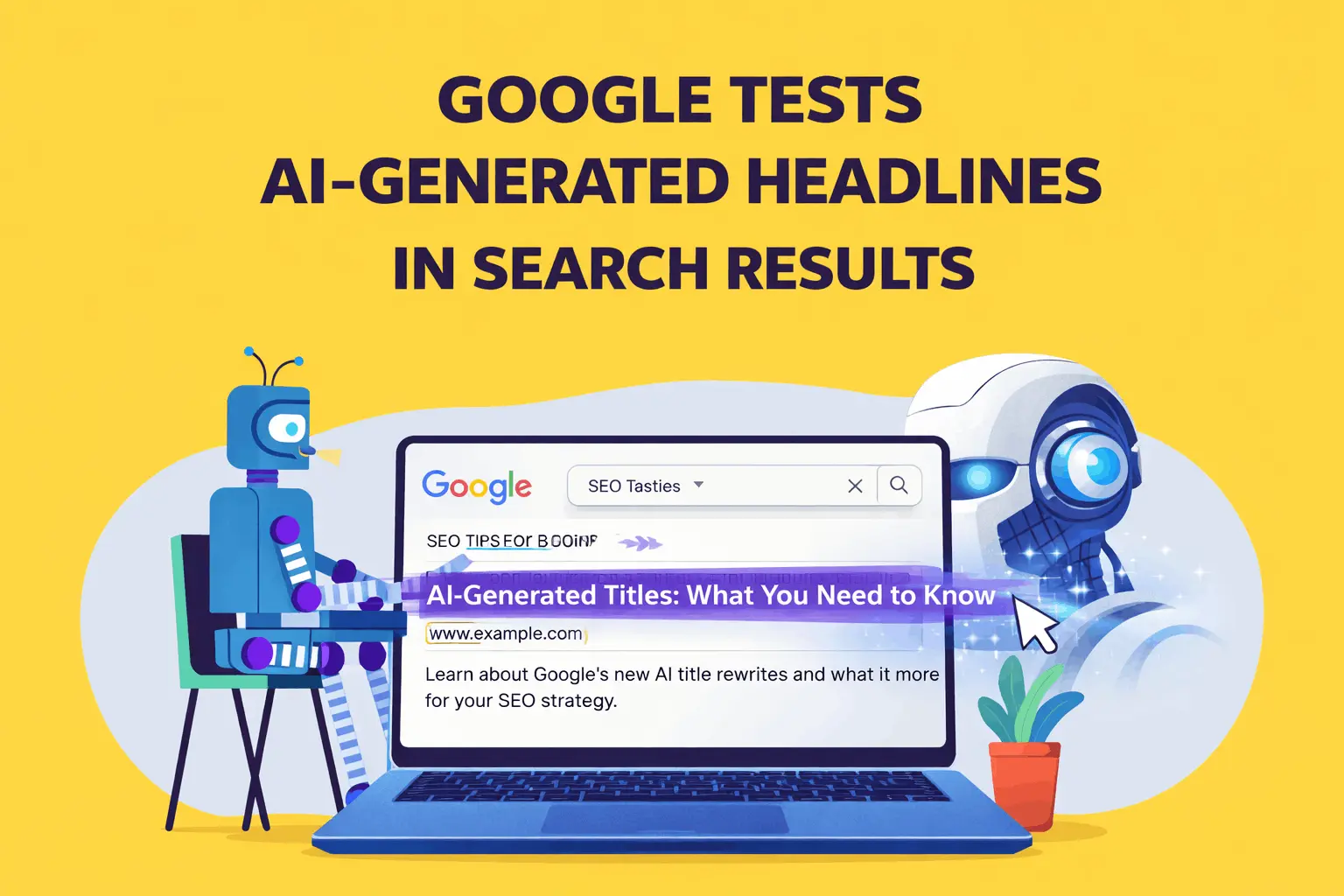
Google has also confirmed that it is experimenting with AI generated titles in search results. The goal? To more closely align user intent and better click-through rates.
This appears to be a natural development at face value.
After all, Google has been changing Headlines and titles over time.
However, this update is not just a simple update but a significant change of control.
Article Summary: Key Details of the AI-Generated Headlines Test
- Google is experimenting with AI-written title rewrites on search results.
- The objective is to further align the intent of the search and enhance CTR.
- Publishers will lose control of the appearance of titles in SERPs.
- SEO is going towards intent-driven and AI-readable content.
What’s Actually Changing?
Google is shifting towards title adjustments based on rules, to AI-based dynamic rewrites.
That means:
- Titles can vary according to the search purpose.
- Messaging can be automatically rephrased.
- Per query, headlines might be customized.
In simple terms:
The title you compose is no longer assured to be the title that the users get.
The Reason why Google is doing this
Google is implementing title rewrites using AI to ensure that search results are more user-intentionally relevant and that the results have higher click-through rates. With sophisticated algorithms and semantic SEO indicators, it is able to create better and more relevant, dynamic headlines, which improve user experience and respond to changing search behavior in contemporary SERP.
On the part of Google, this enhances:
- Relevance to search queries.
- User engagement (CTR)
- Overall search experience
AI is now able to perceive:
- Context
- Intent
- Semantic meaning
And create titles that are more akin to what the users are seeking.
The Hidden Risk for SEO
With more AI-generated title rewrites, marketers will have less control over messaging, brand voice, and SERP look. Dynamic headlines can also misunderstand the intent of the search, which can affect the click-through rate, content placement and overall search performance in the growing automated search ecosystem.
This presents a new challenge to marketers and publishers.
You lose part of the control over:
- Messaging
- Tone
- Positioning
- Brand voice
Although your title may be optimized to the maximum, Google can rewrite it in case it feels that a different version will do better.
The Greater Pattern (Don’t Ignore This)
This isn’t an isolated update.
It’s part of a larger trend:
- AI-generated summaries
- Personalized search results
- Generative answers
- Zero-click searches
Slowly but surely, search is moving away form indexing content to interpreting content.
And that alters all that.
Optimization vs Automation: The New Reality
SEO moves towards manual optimization to AI-based automation whereby the search engines dynamically change titles and the way they display their content. Although this enhances search intent alignment and user experience, it disrupts the conventional strategies of SEO, and marketers need to emphasize semantic relevance and flexible content indicators.
Pros:
- More user intent alignment.
- Potentially higher CTR
- Improved search experience
Cons:
- Less predictability
- Reduced control
- Potential misunderstanding of text.
In some cases, AI can enhance your headline.
In other occasions it may twist your original message.
What Should You Do Now?
Rather than focusing on title tags, change your approach:
Focus on:
- Clear content intent
- Strong topical authority
- Semantic SEO
- Clarity of structured content (H1–H3)
- Consistent brand messaging
Quit depending on:
- Exact-match titles
- Clickbait headlines
- Over-optimized phrasing
The goal now is:
Ensure that your content is easy to understand and not to rank.
The Future of SEO: Optimization vs Automation in AI-Powered Search
Search is becoming:
- Dynamic
- Personalized
- AI-driven
Brands that will win will be those that:
- Develop effective content signals.
- Create intent-aligned pages
- Write human-friendly and AI-friendly code.
Conclusion:
The search engine is transforming the way content looks and works. With Google gaining increased control over titles, the key to success in SEO will become clarity, intent, and robust content indicators. It is not about finding the right wording but rather developing what AI can read and give the user with confidence and accuracy.
FAQs
1. What are AI-generated Headlines/title rewrites in Google search?
AI-generated title rewrites are automatically generated headlines by Google which replaces or changes your original title tag to better reflect search intent and enhance click-through rates in SERPs.
2. Why does Google rewrite Headlines/title tags?
Google paraphrases title tags to enhance relevancy, match user queries, and user experience. In the case of AI, these rewrites are more dynamic and relying on semantic understanding.
3. Do AI Headlines/title rewrites affect SEO rankings?
Title rewrites do not directly affect rankings but may affect click-through rates (CTR), which in turn affects SEO performance and traffic indirectly.
4. How can I prevent Google from rewriting my Headlines/titles?
Rewrites cannot be completely avoided but can be minimized by composing clear, concise and intent-based title tags that correspond to the contents on your page and do not overload it with keywords.
5. How should SEO strategies adapt to AI-driven search changes?
Pay attention to semantic search, user intent, and structured content, topical authority. Rather than just depending on title optimization, make sure that your content provides powerful, unambiguous signals, which AI can understand correctly.
Also Read:
What are Two Ways Optimization Score can help Marketers Succeed
How often does Google Maps update?
.COM vs .ORG vs .NET vs .CO vs .IO – Which Domain Extension is Best